
Do you need planning permission for a driveway in Solihull?
29 July 2026 · 5 min read
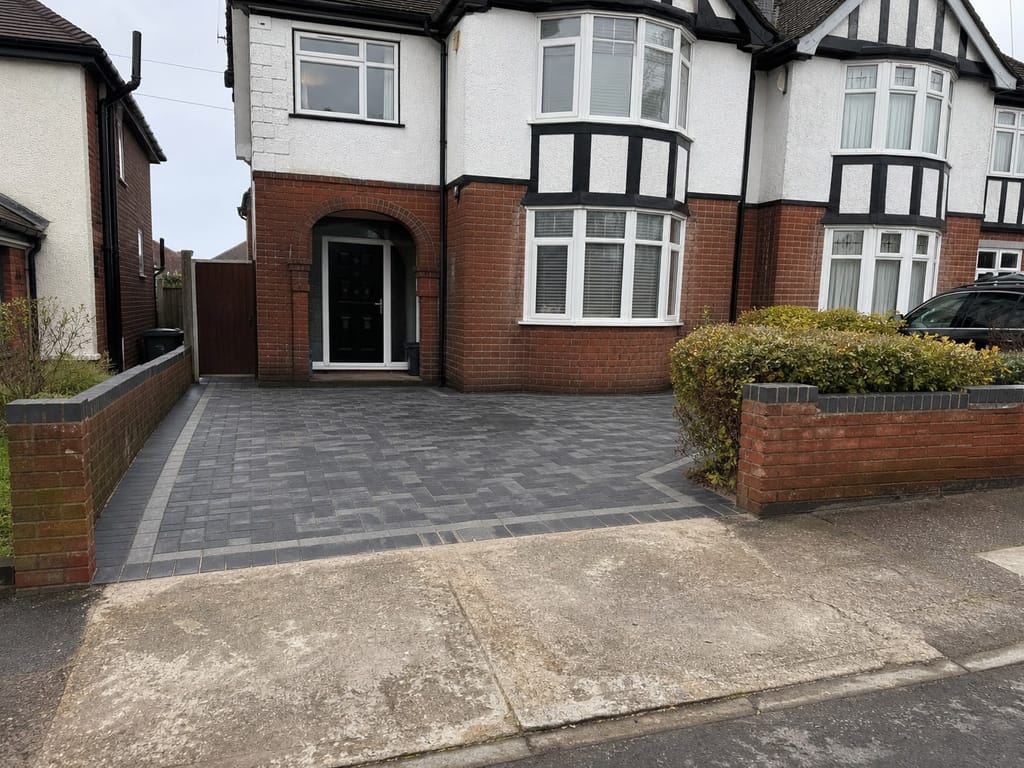
Short answer: most people do not. The rule catches one specific case, and it is easy to design your way out of it.
The actual rule
In England, paving a front garden falls under permitted development, with one exception. You need planning permission if all three of these are true:
- The new surface is more than five square metres
- It uses a hard, non-permeable material
- The rainwater runs off onto the road rather than into a permeable area
Break any one of those and no permission is needed. Use a permeable surface and you are clear at any size. Direct the run-off onto a lawn or a border and you are clear even with a solid surface. Keep it under five square metres and you are clear regardless. The source is the Planning Portal guidance on paving your front garden.
Note what the rule does not cover: back gardens. A rear patio sits under different permitted development rules entirely, and a normal ground level patio behind the house needs no permission.
What counts as permeable
Four surfaces get you there:
- Resin bound. Stone coated in resin with voids between, so water passes through. This only works if the layer below drains too, which means an open textured base course rather than a sealed slab.
- Permeable block paving. Wider joints filled with grit rather than sand, on a clean stone sub-base. Looks like ordinary block paving from three feet away.
- Porous asphalt. Tarmac with the fine material left out so it drains through. Less common on domestic drives but it exists.
- Gravel. The original permeable surface, and still the cheapest.
Standard tarmac, standard block paving on sand, concrete and mortared slabs are all non-permeable. You can still use them: you just have to send the water somewhere other than the road. A lawn, a planted border, a soakaway or a channel drain piped into one all count.
The thing half the internet gets wrong
You will read that a new SuDS law landed in 2026 and that driveways now need approval. That is not right, and it is worth being clear about because some firms use it to sell a more expensive job.
Schedule 3 of the Flood and Water Management Act 2010 has not been commenced in England. There is no new statutory sustainable drainage regime for homeowners to navigate, and the government has signalled it would rather improve delivery through planning policy than switch Schedule 3 on. Defra's refreshed National Standards for SuDS are technical guidance, not law, and they do not create an approval process a householder must go through.
The five square metre rule everyone quotes is not new either. It came in with a 2008 amendment to permitted development rights. Anyone selling you a driveway on the basis of "the new 2026 rules" is either out of date or hoping you are.
Conservation areas and listed buildings
Permitted development rights get trimmed in some places. If your property is listed, or sits in a conservation area, or is covered by an Article 4 direction, the usual front garden rights may not apply and the council may want a say on materials as well as drainage. Parts of Solihull and the villages around it do carry conservation area status, so it is worth a check on the council's map before you order stone. Solihull Metropolitan Borough Council's planning team will confirm.
The dropped kerb is a separate thing
This trips people up. Planning permission for the surface and permission for a vehicle crossing over the footpath are two different applications to two different parts of the council. If there is no existing crossing from the road to your property, you need a dropped kerb application whatever surface you lay, and the highways team assesses sightlines, the footpath build-up and any street furniture in the way. Budget roughly £800 to £2,500 for the crossing itself.
Getting the driveway right and forgetting the crossing leaves you with a lovely drive you cannot legally drive onto. Sort the application early, because it takes weeks, not days.
What we do about it
At the site visit we tell you which side of the line your job falls on before you spend anything. If you want a solid surface on a front garden over five square metres, we price the drainage that keeps you compliant and show it as its own line on the quote. If permeable suits you better, we say so. Either way you get it in writing, and you can take that to the council if you ever need to.
More on the surfaces themselves is in the surfaces guide, and the rest of the common questions are on the questions page.