
What a new driveway costs in Solihull: 2026 guide
29 July 2026 · 6 min read
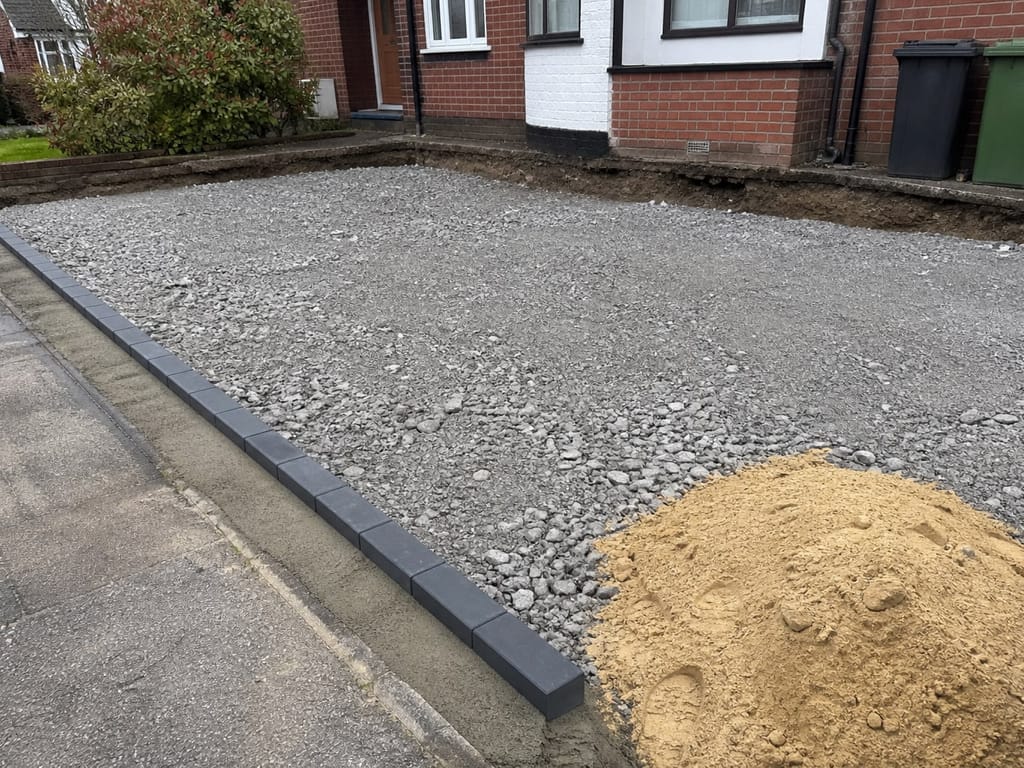
Nobody enjoys ringing round for driveway prices, and the numbers you get back can be miles apart for what sounds like the same job. This is what the market actually looks like in 2026, where the differences come from, and how to tell a cheap quote from a thin one.
The guide bands
These are published UK figures for 2026, fitted, per square metre:
Guide bands from published UK cost surveys, not a quote. Prices run above the national baseline in London and the South East and below it in the North.
What that means for a real drive
A two car drive is roughly 50 square metres. On the bands above that works out at about:
- Tarmac: £3,000 to £4,500
- Resin bound: £4,500 to £7,000
- Block paving: £5,000 to £7,500
A 30 square metre patio typically lands somewhere between £1,800 and £3,500 all in. Add £800 to £2,500 on top if the job needs a dropped kerb, which is a separate council application rather than something the paving contractor decides.
The six things that move the number
- Area. The obvious one, and the one to check first on any quote. If the square metres are not written down, ask why.
- What comes out. Digging out 150mm of soil is one price. Breaking out an old concrete raft, or finding made ground that has to go deeper, is another. Muck away is charged by the tonne and it adds up fast.
- Drainage. A channel drain across the threshold, a gully, or a soakaway. Necessary where the fall runs the wrong way, and a real cost.
- Edgings and steps. Kerbs, soldier courses, retaining edges where the ground drops away. More metres of edge on an awkward shape means more money.
- Access. A wide frontage where a mini digger and a grab lorry can work is cheaper than a terrace where every barrow goes out by hand.
- Season. Contractors are busiest from June to August and prices firm up. Autumn discounts of ten to fifteen per cent against summer rates are common, and November to January is the quietest stretch of the year.
How to compare two quotes
Price per square metre is the wrong first question. Two quotes can be £2,000 apart and both be honest, because they are not building the same thing. Look for these on the sheet:
- The area in square metres. If it is missing, you cannot check anything else.
- The excavation depth and the sub-base depth. A domestic car drive normally wants 100mm to 150mm of compacted MOT Type 1 over a dug out formation. A quote that says "prepare base" and nothing more is hiding the number that matters.
- Edge restraint. Named, and priced. Tarmac and block paving without a haunched edge fail from the sides in.
- What happens to the spoil. Carted away on a licensed ticket, or left in a heap for you to sort out.
- Drainage. Named where it is needed, and honestly absent where it is not.
- The guarantee. In writing, with its terms, before you accept.
A quote that is thirty per cent under the others usually differs in exactly one of those lines. Find which.
The one to walk away from
If somebody knocks your door offering a driveway, do not engage, however good the price sounds. Trading Standards publish warnings about this every year: doorstep callers with surplus tarmac from a job nearby, high pressure to decide today, a headline price that turns out to be per square metre once the machine is running, and a final bill several times the number you agreed. There are documented cases of victims being taken from a few hundred pounds to five figures across a few days.
The defence is simple. Never accept a doorstep price. Get it in writing, with the area on it. Pay nothing until you have accepted a written quote. Any legitimate firm will be fine with all three.
What we do
We publish the guide bands above on every service page so you can sanity check any quote, ours included. Our own price comes from a site visit, arrives in writing with the area and the build-up on it, and does not change unless the ground turns up something nobody could have seen, in which case we stop and get your agreement in writing before carrying on.
The how we quote page sets out the rest of it, and the surfaces guide compares the four options side by side.